How Much Does Security+ Really Cost?
- Natnael Gossaye

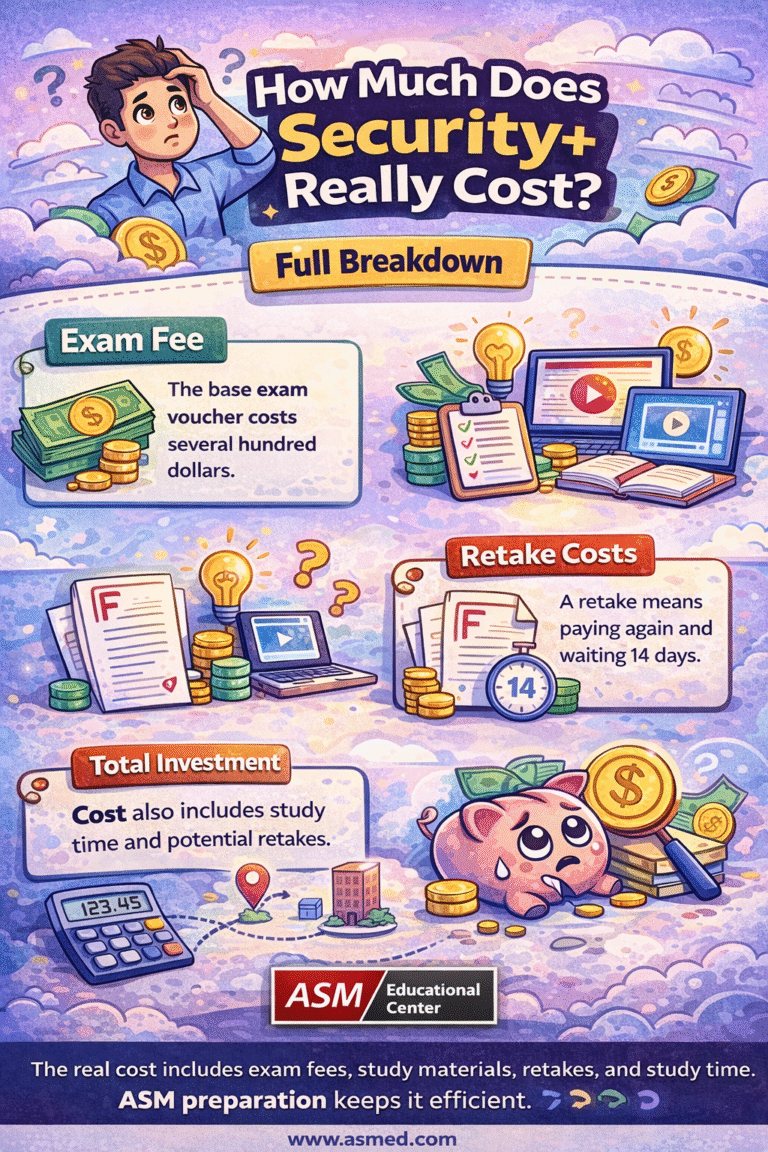
How Much Does Security+ Really Cost?
One of the most common concerns people have before starting CompTIA Security+ is simple.
“I do not have an IT background. Is this realistic for me?”
It is a fair question. Cybersecurity sounds technical. The terminology can feel overwhelming. Many job postings mention experience requirements. It is easy to assume that Security+ is only for people already working in IT.The truth is more nuanced.
Security+ is designed as an entry-level cybersecurity certification. But entry-level does not mean effortless. It means foundational.
Understanding what that actually requires makes all the difference.
Can Someone With No IT Experience Really Pass Security+?
Yes. Many people pass Security+ without prior IT jobs. Career changers from healthcare, retail, education, military service, finance, and completely unrelated fields earn this certification every year. However, what often gets left out of online conversations is that beginners who succeed usually do not skip fundamentals. They build them.
Security+ assumes familiarity with basic networking, operating systems, and how systems communicate. It does not go deep, but it assumes awareness.
When beginners struggle, it is usually because they try to jump straight into security topics without first understanding how networks and systems work.
Why Security+ Feels Overwhelming at First
Security+ covers threats, vulnerabilities, architecture, identity management, cryptography, and incident response. For someone new to IT, those topics can feel like a different language.The issue is not intelligence. It is exposure.
If you have never worked with IP addresses, ports, or Linux commands, exam questions that reference them will naturally feel abstract.
This is why some beginners benefit from strengthening networking fundamentals first. Network+ often makes Security+ easier because it explains how data moves before explaining how to secure it.
Skipping that step is possible. But it usually requires more time and patience.
How Long Does It Take for Beginners?
For someone with no IT background, preparation time is usually longer than for someone already working in technology. Many beginners spend several months studying consistently before scheduling the exam. This includes learning networking basics, reviewing security domains, and practicing performance-based scenarios.
Trying to compress everything into a few weeks often increases stress and lowers retention. Security+ rewards steady preparation more than speed.
What Beginners Should Focus On First
Before diving into deep exam objectives, beginners should understand how networks function at a basic level. That means knowing what an IP address is, what a port does, how a firewall works, and how devices communicate.
Linux familiarity also helps. Even simple command-line navigation builds confidence when performance-based questions appear. Once the foundation is steady, security concepts start to connect instead of feeling random.
Are There Entry-Level Jobs With Just Security+?
Security+ alone does not guarantee a cybersecurity analyst role immediately. It qualifies candidates for entry-level IT roles with a security focus and helps meet compliance requirements for certain government positions.
For beginners, the typical path often looks like this. Earn Security+. Gain hands-on exposure. Start in support or junior technical roles. Build from there.
Security+ opens doors. It does not skip steps.
What About Government and DoD Roles?
Security+ is widely recognized and required under certain Department of Defense directives. For individuals targeting government or contractor positions, it can be a key requirement.
However, certification without practical understanding can create interview challenges. Employers still expect candidates to explain concepts clearly.
Preparation must focus on comprehension, not memorization.
When Network+ Might Be the Better First Step
One of the first things people look up before committing to CompTIA Security+ is the cost. The reason this question matters is simple. Most people are not just investing money. They are also investing time, energy, and often making a career transition decision.
The honest answer is that the cost of Security+ is not just the exam fee. What you end up spending depends on how you prepare, how structured your approach is, and whether you need to retake the exam.
Why the Cost Is Not Just the Exam
When people search for the cost of Security+, they usually find the price of the exam voucher. While that is the main expense, it is not the full picture.
Preparation takes time. Study materials vary in quality. Some people move through the process once. Others repeat parts of it due to unclear direction or lack of structure.
Security+ is not expensive because of one payment. It becomes expensive when preparation is inefficient.
The Base Exam Cost
The Security+ exam voucher typically costs several hundred dollars. This is the minimum required cost to earn the certification.
Some candidates purchase bundles that include a retake option or additional study resources. Others choose to buy only the voucher and prepare independently.
Both approaches can work. The difference usually shows in how prepared someone feels on exam day.
Study Materials and Preparation Costs
Beyond the exam itself, most candidates invest in some form of preparation.
This may include video courses, practice exams, labs, or structured training programs. Some people try to minimize cost by using free resources. Others invest upfront in guided learning to avoid confusion later.
The trade-off is usually time versus clarity.
Free resources can work, but they often require more effort to organize and filter. Structured training tends to reduce guesswork, which can shorten the overall timeline.
The Hidden Cost of Retakes
One of the most overlooked costs is retaking the exam.
If you fail, you must purchase another voucher and wait before attempting again. This adds both financial cost and time delay. For some candidates, this becomes the most expensive part of the process.
Retakes are allowed, but they are rarely part of the original plan. Most people would prefer to pass on the first attempt rather than pay and prepare again.
This is where preparation style directly affects total cost.
Time as a Real Cost
Time is often ignored when discussing cost, but it matters.
Studying without structure can extend preparation by weeks or even months. Switching between multiple resources, repeating the same topics, or not knowing when you are ready can slow progress significantly.
A longer timeline may not feel expensive at first, but it delays certification, job applications, and potential income growth.
In that sense, time becomes part of the total investment.
Beginner vs Experienced Cost Differences
Your background influences how much you will spend.
Beginners may invest more time and possibly additional resources to build foundational knowledge. Some may choose to study networking concepts before fully diving into Security+.
Candidates with IT experience often move faster and may require fewer resources, but they still need to align their knowledge with exam structure.
The difference is not just money. It is how efficiently someone moves through preparation.
How Structure Reduces Overall Cost
Many of the extra costs associated with Security+ come from lack of direction.
When preparation is structured, candidates tend to avoid unnecessary repetition, reduce the likelihood of retakes, and move through the material more efficiently.
At ASM Educational Center, Security+ preparation is organized around exam objectives, hands-on labs, and scenario-based practice. This helps students focus on what matters for the exam rather than trying to cover everything at once.
The goal is not to make preparation longer. It is to make it more efficient.
Is Security+ Worth the Investment
For many people, the answer is yes, but only when approached correctly.
Security+ is often used as a starting point for cybersecurity roles and is required for certain government and compliance-based positions. It can open doors, but it is not a shortcut.
The value comes from what you understand, not just what you pass.
When preparation is thoughtful and aligned with the exam, the investment tends to make sense.
Frequently Asked Questions
The exam voucher typically costs several hundred dollars. This is the base cost required to take the exam.
Are there additional costs beyond the exam?
Retakes can significantly increase the total cost, along with extended preparation time.
It is possible, but it often requires more time and effort to organize reliable resources.
In many cases, yes. It can reduce study time and lower the risk of needing a retake.
It can be, especially for entry-level cybersecurity roles and positions that require certification. The value depends on how well you prepare and apply the knowledge.
If you’re still unsure about taking the course, check out more of our blogs or visit our main website at www.asmed.com for more information or to get in touch with us. You can also view our
upcoming Evening Boot Camp schedule and choose the one that best fits your availability here: www.asmed.com/s1.
If you are currently unemployed and live in the Washington, D.C. area, you may qualify for a grant that fully funds your IT training. To find out if you’re eligible, please fill out this short form: www.asmed.com/wd.
Good luck on your learning journey—and we hope to see you in class soon!
