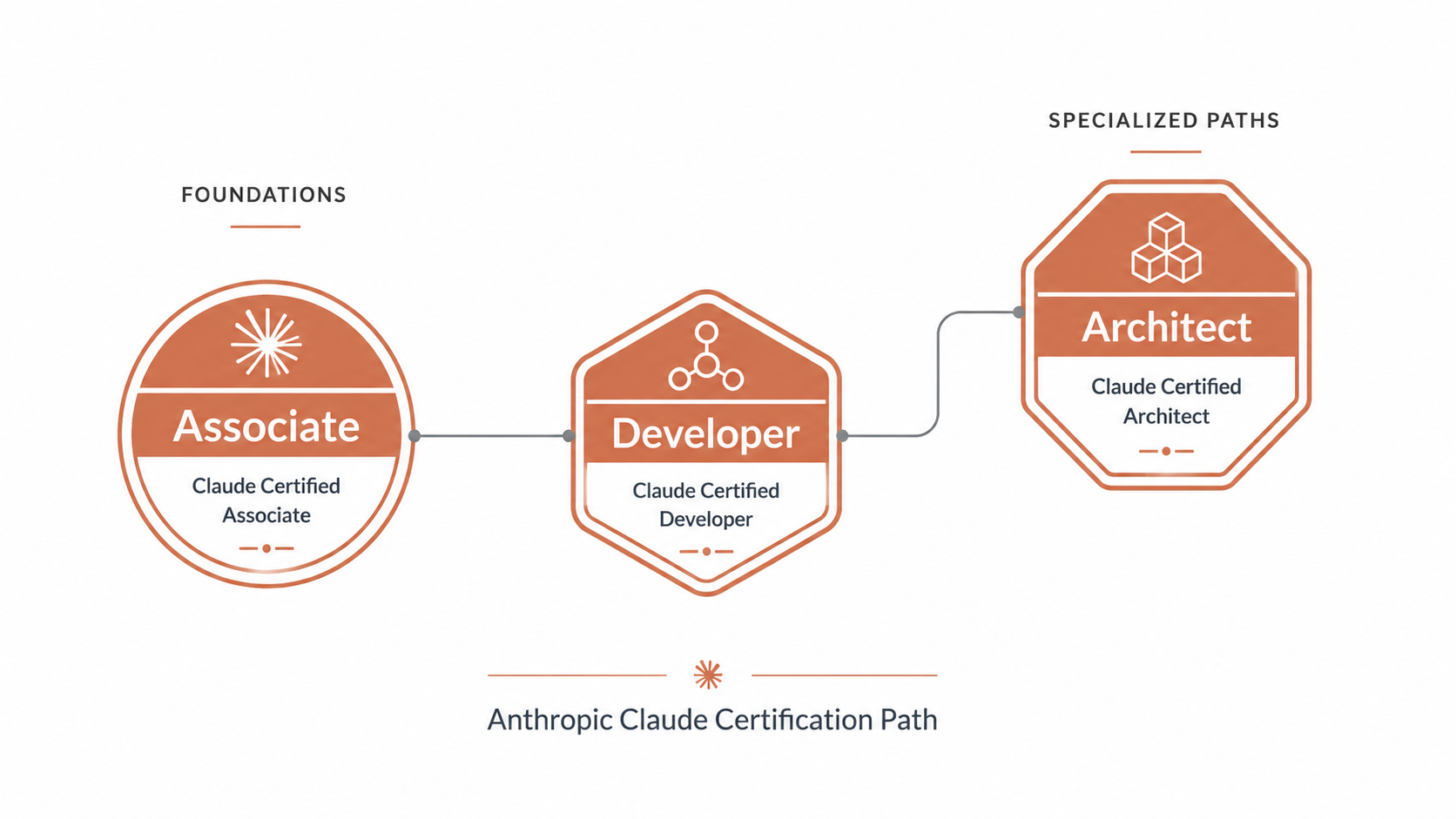
Q: What is the Claude Certified Architect – Foundations training course and who is it for?
A: The Claude Certified Architect – Foundations training course develops foundational skills for planning, designing, evaluating, and guiding Claude-powered solutions. It is intended for solution architects, enterprise architects, AI architects, cloud architects, technical consultants, platform professionals, systems integrators, engineering leaders, and other professionals responsible for designing how Claude may be incorporated into applications, systems, and organizational workflows. ASM Educational Center in Rockville, MD provides independent instructor-led training focused on practical Claude architecture concepts.
Q: Is this an official Anthropic certification course?
A: ASM Educational Center provides independent instructor-led training only. The course covers technical concepts associated with the Claude Certified Architect – Foundations pathway, but ASM does not issue the official Anthropic certification or represent the course as Anthropic-authorized certification training.
Q: Does completing the ASM course earn the official Claude Certified Architect – Foundations certification?
A: No. Completing the ASM training course does not award the official Anthropic certification. Students who successfully complete the course receive an ASM Educational Center certificate of course completion.
Q: Who is eligible to pursue the official Anthropic certification?
A: Anthropic currently limits access to the Claude Certification Program to eligible individuals affiliated with organizations participating in the Claude Partner Network. Enrolling in ASM training does not establish eligibility for the official certification program. Students interested in pursuing the official credential should confirm their eligibility through their employer and Anthropic.
Q: Does ASM administer the official Anthropic certification exam?
A: No. ASM Educational Center offers training only and does not administer, schedule, register candidates for, or provide access to the official Anthropic certification examination.
Q: Does the ASM training package include an official exam voucher?
A: No. The ASM course includes instructor-led training, course materials, guided activities, and course-completion benefits only. The official Anthropic examination, exam registration, and exam voucher are not included.
Q: What official certification pathway is this training related to?
A: The training covers foundational architecture concepts associated with the Claude Certified Architect – Foundations pathway. Information about the official certification is provided only to help students understand the professional knowledge areas connected to the training. ASM does not guarantee access to the official certification program.
Q: Do I need previous Claude or architecture experience before taking this course?
A: Previous professional architecture experience is not required, but familiarity with software development, APIs, cloud computing, system design, or generative AI concepts is recommended. Experience using Claude, Claude Code, the Claude API, agentic workflows, or Model Context Protocol may also help students understand the technical material.
Q: What are the ASM course prerequisites?
A: Applicants must have a high school diploma, GED, or an official high school transcript showing proof of graduation. Students should also be comfortable reading technical documentation and evaluating design, security, performance, scalability, reliability, and cost considerations.
Q: What topics are covered in Claude Certified Architect – Foundations training?
A: The course covers Claude solution architecture, use-case evaluation, agentic systems, workflow orchestration, tool design, Model Context Protocol integration, Claude API concepts, Claude Code workflows, prompt and context management, model selection, security, reliability, evaluation, scalability, performance, cost management, and production-readiness planning.
Q: What practical skills will I develop during the course?
A: Students will learn how to evaluate potential Claude use cases, translate business requirements into technical designs, select appropriate Claude capabilities, plan agentic workflows, design tool and data integrations, manage application context, evaluate architecture tradeoffs, identify security and governance considerations, and prepare Claude-powered solutions for reliable implementation.
Q: What is Claude solution architecture?
A: Claude solution architecture involves planning how Claude will interact with applications, users, tools, data sources, security controls, and organizational processes. It includes decisions involving system components, integrations, model selection, context management, scalability, reliability, performance, governance, and cost.
Q: What is an agentic architecture?
A: An agentic architecture is a system design in which Claude can perform multi-step tasks, use approved tools, evaluate intermediate results, and determine appropriate next actions. The course introduces concepts for designing agentic systems with appropriate controls, boundaries, monitoring, and human oversight.
Q: What is Model Context Protocol?
A: Model Context Protocol, commonly called MCP, is a framework for connecting AI applications with external tools, services, and data sources. The training may explain how architects can evaluate and design MCP-based integrations that provide Claude with controlled access to approved organizational capabilities and information.
Q: Does the course cover the Claude API?
A: Yes. The course may cover architectural concepts related to integrating the Claude API into applications and services. Topics may include model interaction, context management, tool use, application security, reliability, performance, and integration planning.
Q: Does the course cover Claude Code?
A: Yes. The course may introduce Claude Code architecture concepts, configuration approaches, development workflows, project instructions, permissions, tool access, and responsible use within software-development environments.
Q: Does the course include hands-on activities?
A: Yes. The course may include instructor demonstrations, guided architecture exercises, scenario analysis, solution-design activities, workflow-planning exercises, knowledge assessments, and practical discussions involving Claude-powered applications. Specific activities may vary according to the course schedule and delivery format.
Q: Is programming required for this course?
A: Advanced programming is not required, but students should understand basic software-development and system-integration concepts. Familiarity with APIs, cloud platforms, command-line tools, Python, JavaScript, or related technologies may be helpful when reviewing technical architecture scenarios.
Q: Is this training suitable for complete beginners?
A: This course is foundational within the Claude architecture pathway, but it is more technical than a general introduction to Claude or artificial intelligence. Complete beginners may benefit from first developing basic knowledge of Claude, generative AI, software systems, APIs, cloud computing, and system-integration concepts.
Q: What professional roles can benefit from this training?
A: The training can benefit solution architects, enterprise architects, AI architects, cloud architects, platform architects, systems integrators, technical consultants, AI implementation specialists, engineering leaders, technology managers, and other professionals responsible for planning or guiding Claude-powered solutions.
Q: Will completing this course qualify me for a specific job?
A: No training course can guarantee employment or qualification for a specific position. However, the course can help professionals strengthen their understanding of Claude solution architecture, AI integration, agentic systems, security, scalability, reliability, governance, and production-readiness considerations that may be relevant to technical architecture roles.
Q: What is the difference between Claude Associate training and Claude Architect training?
A: Claude Associate training focuses on using Claude for professional productivity, research, analysis, communication, and workplace workflows. Claude Architect training is more technical and focuses on evaluating requirements, designing complete solutions, planning integrations, selecting technologies, and addressing security, scalability, reliability, performance, governance, and cost.
Q: What is the difference between Claude Developer training and Claude Architect training?
A: Claude Developer training focuses primarily on building, integrating, testing, securing, and troubleshooting Claude-powered applications. Claude Architect training focuses on evaluating requirements, designing the overall solution, selecting technologies, planning integrations, establishing architectural controls, and making decisions involving scalability, reliability, performance, governance, and cost.
Q: Does ASM offer in-person Claude Architect training?
A: ASM may offer the training in person at ASM Educational Center, located at 11200 Rockville Pike, Suite 220, Rockville, Maryland 20852, depending on the published course schedule.
Q: Does ASM offer virtual Claude Architect training?
A: ASM may offer Claude Certified Architect – Foundations training through a live virtual WebEx classroom, depending on the published schedule. Virtual students can participate remotely in instructor-led lessons, demonstrations, technical discussions, architecture scenarios, and guided course activities.
Q: How long does it take to complete the training?
A: Completion time depends on the published ASM course schedule and delivery format. The course is structured to develop practical Claude architecture knowledge through instructor-led lessons, demonstrations, guided activities, scenario analysis, technical discussions, and knowledge assessments.
Q: What will I receive after completing the ASM training?
A: Students who successfully complete the course receive an ASM Educational Center certificate of course completion. This certificate confirms completion of ASM’s independent training program and is separate from the official Anthropic certification.
Q: Can I include the ASM certificate of course completion on my resume or LinkedIn profile?
A: Yes. Students may list the ASM Educational Center certificate under training, continuing education, or professional development. It should not be represented as the official Claude Certified Architect – Foundations certification.
Q: Does ASM guarantee eligibility for or success on the official Anthropic certification exam?
A: No. ASM does not guarantee certification eligibility, examination access, or a passing result. The official Anthropic certification program is separate from ASM’s training and is currently limited to eligible individuals affiliated with organizations participating in the Claude Partner Network.
Q: What training can I pursue after completing Claude Architect – Foundations?
A: Students may continue developing their skills through Claude development, advanced AI architecture, AI governance, cloud architecture, system integration, cybersecurity, Model Context Protocol, agentic systems, enterprise AI implementation, and responsible AI training.
Q: Why should I choose ASM Educational Center for Claude Architect training?
A: ASM Educational Center provides experienced instructors, structured technical training, guided learning activities, flexible delivery options, and more than 30 years of professional technology-training experience. The course is designed to help students develop practical Claude architecture knowledge while clearly distinguishing ASM training from the restricted official Anthropic certification program.



 Live Instructor-Led Training